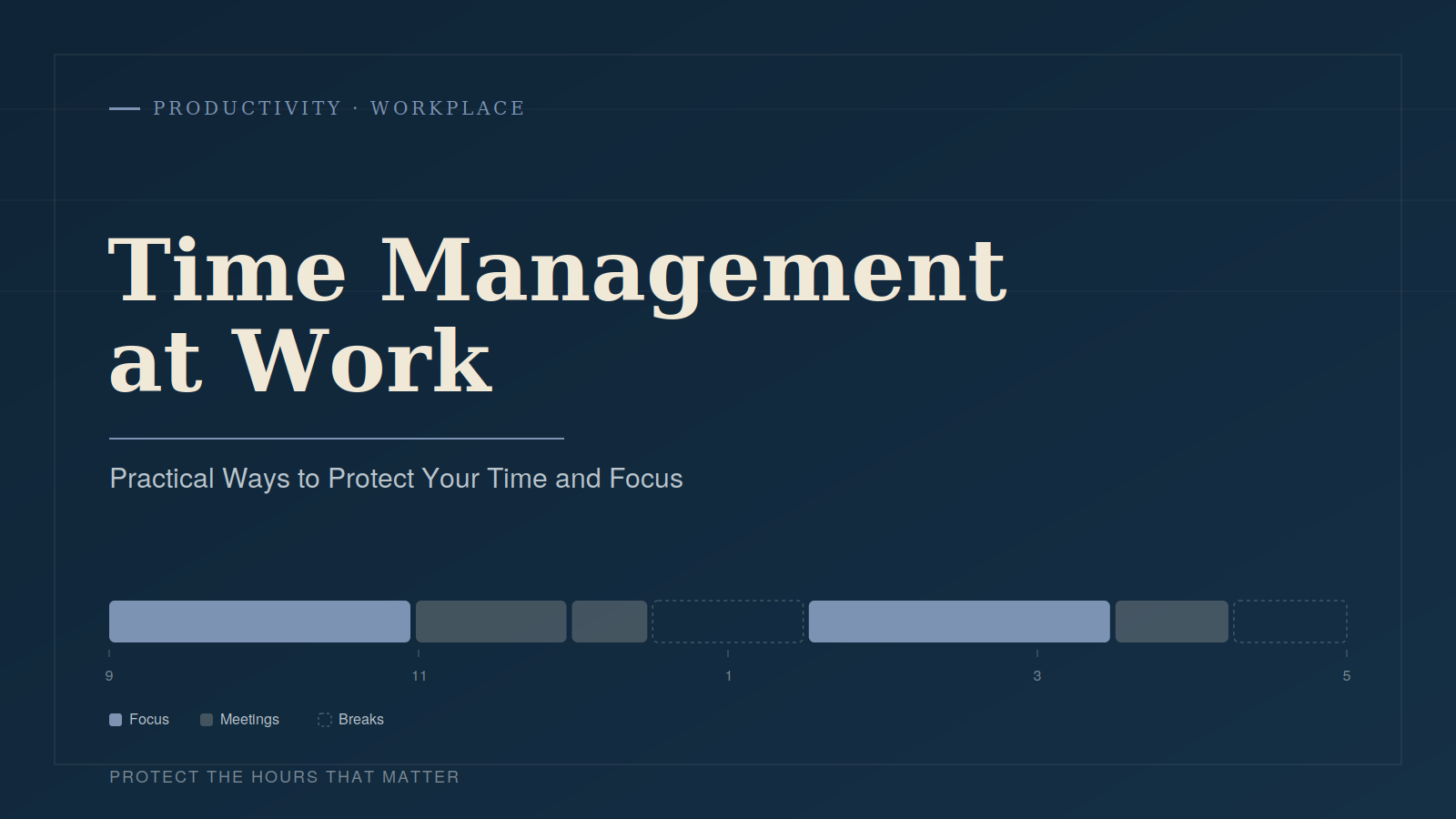
Time is one of the few resources that everyone has in equal measure. Whether you’re an employee, manager, freelancer, or business owner, every day gives you 24 hours to complete your tasks and achieve your goals. The difference between highly productive professionals and those who constantly feel overwhelmed often comes down to one skill: effective time management.
Good time management is not about working longer hours. Instead, it’s about working smarter by focusing on priorities, eliminating distractions, and using your time efficiently. When you manage your time well, you can complete more work, experience less stress, improve the quality of your work, and create a healthier work-life balance.
In this guide, you’ll discover practical strategies that can help you manage your time effectively, improve your productivity, and make each workday more successful.
What Is Time Management?
Time management is the process of planning, organizing, and controlling how you spend your working hours.
It involves making conscious decisions about:
- Prioritizing tasks
- Setting goals
- Scheduling work
- Managing interruptions
- Meeting deadlines
- Balancing responsibilities
Effective time management helps you accomplish more while reducing unnecessary stress.
Why Time Management Is Important
Managing your time effectively offers many benefits, including:
- Increased productivity
- Better decision-making
- Reduced workplace stress
- Improved job performance
- Higher quality work
- Better work-life balance
- Increased professional confidence
- More opportunities for career growth
Employers value employees who consistently manage their time well and deliver quality work on schedule.
1. Start Your Day with a Plan
Planning your day before you begin working helps you stay focused and organized.
Each morning:
- Review your schedule.
- Identify important deadlines.
- List your top priorities.
- Allocate time for major tasks.
A clear plan reduces uncertainty and helps you work with purpose.
2. Prioritize Your Most Important Tasks
Not every task has the same level of importance.
One helpful approach is to identify tasks that are:
- Urgent and important
- Important but not urgent
- Urgent but less important
- Neither urgent nor important
Focus your energy on high-priority work before less critical activities.
3. Set Realistic Goals
Trying to complete too much in one day often leads to frustration.
Instead:
- Break large projects into smaller tasks.
- Set achievable daily goals.
- Celebrate completed milestones.
Small achievements build momentum throughout the day.
4. Avoid Multitasking
Although multitasking may seem productive, constantly switching between tasks can reduce concentration and increase mistakes.
Instead:
- Complete one task before moving to the next.
- Give important work your full attention.
- Reduce unnecessary interruptions.
Focused work often leads to better results.
5. Use Time Blocking
Time blocking involves scheduling specific periods for particular activities.
For example:
- 8:00–9:00: Emails
- 9:00–11:00: Project work
- 11:00–11:30: Meetings
- 1:00–3:00: Client work
This approach helps structure your day and reduces wasted time.
6. Minimize Workplace Distractions
Common distractions include:
- Social media
- Personal phone calls
- Unnecessary meetings
- Constant notifications
- Frequent interruptions
Reduce distractions by:
- Turning off non-essential notifications.
- Keeping your workspace organized.
- Scheduling specific times to check emails.
7. Learn to Say No
Taking on too many responsibilities can reduce your effectiveness.
Politely decline additional work when your schedule is already full, or discuss priorities with your manager.
Protecting your time allows you to maintain quality and avoid burnout.
8. Take Regular Breaks
Working continuously for hours can reduce concentration.
Short breaks help:
- Improve focus
- Reduce fatigue
- Increase creativity
- Maintain productivity
Stepping away from your desk for a few minutes can refresh your mind.
9. Organize Your Workspace
A tidy workspace makes it easier to find documents and stay focused.
Keep:
- Frequently used items nearby.
- Files organized.
- Your desk free of unnecessary clutter.
An organized environment often supports organized thinking.
10. Manage Emails Efficiently
Emails can consume a significant portion of the workday.
Instead of checking your inbox constantly:
- Schedule specific times to read emails.
- Respond promptly to important messages.
- Archive or delete unnecessary emails.
This reduces interruptions and improves concentration.
11. Use Productivity Tools
Digital tools can help you stay organized.
Examples include:
- Calendar apps
- Task management software
- Reminder apps
- Note-taking applications
- Project management platforms
Choose tools that simplify your workflow rather than complicate it.
12. Stop Procrastinating
Procrastination often makes tasks feel more difficult than they really are.
To overcome it:
- Start with the smallest step.
- Set short deadlines.
- Remove distractions.
- Reward yourself after completing important tasks.
Taking action builds momentum.
13. Review Your Progress
At the end of each day, ask yourself:
- What did I accomplish?
- What could I improve?
- What should I prioritize tomorrow?
Regular reflection helps you continually improve your time management.
14. Maintain Work-Life Balance
Working longer hours doesn’t always produce better results.
Protect your well-being by:
- Taking annual leave.
- Resting after work.
- Spending time with family and friends.
- Exercising regularly.
Balanced employees are often more productive over the long term.
15. Continue Improving
Time management is a skill that develops through practice.
Experiment with different techniques until you discover what works best for you.
Small improvements made consistently can produce significant long-term results.
Common Time Management Mistakes
Avoid these common habits:
- Leaving important work until the last minute.
- Accepting every request.
- Poor planning.
- Constant multitasking.
- Allowing distractions to control your day.
- Failing to prioritize.
- Ignoring deadlines.
Recognizing these habits is the first step toward improving them.
Frequently Asked Questions
What is the best time management technique?
There is no single best method. Strategies such as time blocking, prioritization, and planning ahead work well for many people.
Can time management reduce stress?
Yes. Better organization and planning can reduce last-minute pressure and help you feel more in control of your workload.
How can I stop procrastinating?
Start with one small task, remove distractions, and focus on progress rather than perfection.
Final Thoughts
Good time management is one of the most valuable workplace skills you can develop. By planning your day, prioritizing important tasks, reducing distractions, and maintaining healthy work habits, you can increase your productivity while reducing stress.
Remember that improving your time management doesn’t happen overnight. Small, consistent changes to the way you organize your work can lead to significant improvements in your performance, confidence, and overall job satisfaction.