Technology changes every day. New software, tools, programming languages, and innovations emerge regularly, making it important for individuals to continuously learn and adapt. Staying updated with technology is no longer optional—it’s essential for career growth and personal development.
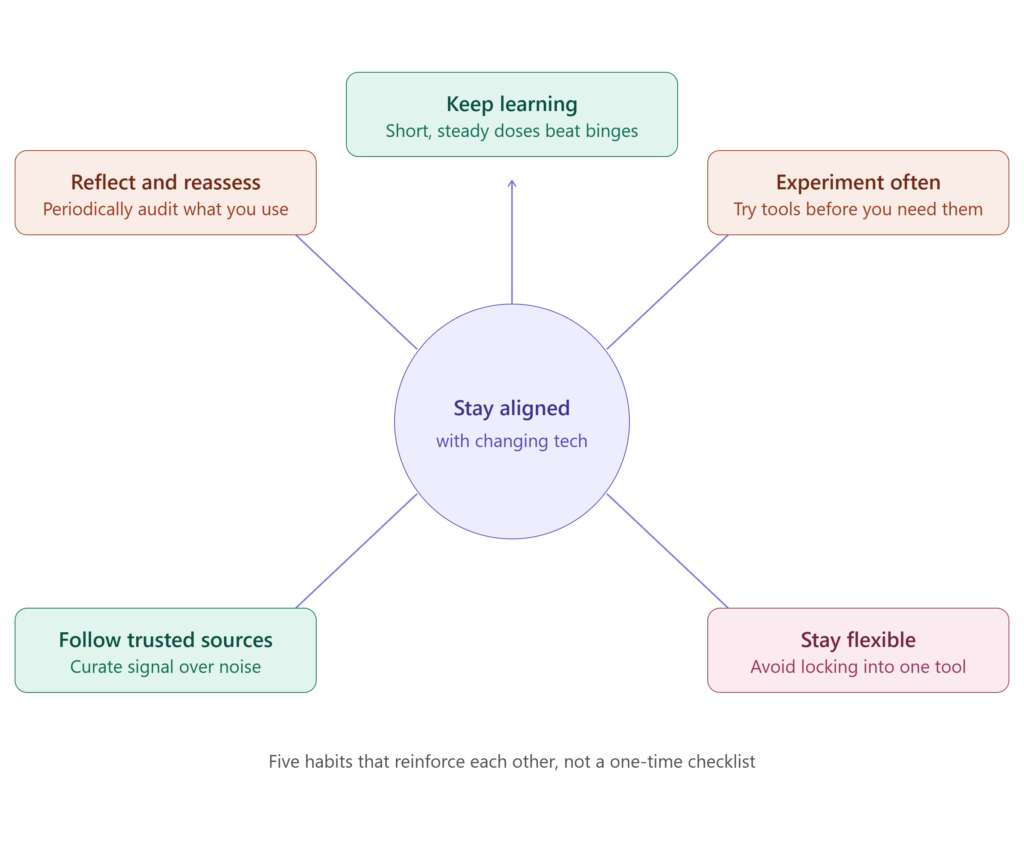
1. Commit to Lifelong Learning
Technology professionals and everyday users should develop a habit of continuous learning. Set aside time every week to learn something new, whether it’s a programming language, software tool, or emerging technology trend.
Ways to learn:
- Take online courses.
- Attend webinars and workshops.
- Read technology blogs and articles.
- Watch educational videos and tutorials.
2. Follow Industry News and Trends
Keep yourself informed about technological advancements by following trusted sources such as:
- Technology websites and blogs
- Industry newsletters
- Professional forums and communities
- Podcasts and YouTube channels
Being informed helps you understand where technology is heading and what skills will be valuable in the future.
3. Earn Certifications
Professional certifications help you stay relevant in your field and validate your skills.
Examples include:
- Cisco CCNA
- Microsoft Azure Certifications
- AWS Certifications
- CompTIA A+ and Network+
- Google Cloud Certifications
Certifications demonstrate your commitment to learning and can improve your career opportunities.
4. Practice What You Learn
Knowledge becomes valuable when applied practically. Build projects, experiment with new software, and practice using new technologies.
For example:
- Create a website.
- Build a mobile application.
- Set up a home network.
- Develop a small database project.
Hands-on experience improves understanding and builds confidence.
5. Join Technology Communities
Networking with other professionals exposes you to new ideas and opportunities.
Join:
- Online forums
- LinkedIn groups
- Developer communities
- Local technology meetups
- Professional associations
Learning from others often accelerates personal growth.
6. Be Adaptable and Open to Change
Technology evolves quickly, and some tools become outdated. Being willing to learn new methods and adapt to changes is one of the most important skills in today’s world.
Successful professionals are those who embrace change rather than resist it.
7. Develop Soft Skills
Technical knowledge alone is not enough. Skills such as communication, problem-solving, teamwork, and critical thinking are equally important.
Technology changes, but strong soft skills remain valuable throughout your career.
8. Follow Emerging Technologies
Pay attention to technologies that are shaping the future, including:
- Artificial Intelligence (AI)
- Cybersecurity
- Cloud Computing
- Data Science
- Internet of Things (IoT)
- Automation and Robotics
- Blockchain Technology
Understanding these trends can help you prepare for future opportunities.
9. Build a Learning Routine
Create a personal development plan:
- Read one technology article daily.
- Complete one online course every few months.
- Earn at least one certification each year.
- Practice new skills regularly.
Consistency is more important than learning everything at once.
10. Maintain a Growth Mindset
Technology will never stop changing. The key to staying relevant is having a mindset that embraces learning and improvement.
Remember:
“The people who succeed in technology are not those who know everything, but those who never stop learning.”
Conclusion
To stay in line with technology as it changes, you must become a lifelong learner, remain curious, and continuously develop new skills. By staying informed, practicing regularly, earning certifications, and adapting to change, you can remain competitive and thrive in an increasingly digital world.
Technology will continue to evolve, but those who commit to learning and growth will always find new opportunities and stay ahead of the curve.