Cybersecurity is one of the fastest-growing careers in the world, with companies, governments, and financial institutions constantly looking for skilled professionals to protect their systems and data. The good news is that you don’t need years of experience to get started. With the right learning path, you can build the skills needed for an entry-level cybersecurity role.
Step 1: Learn Basic Computer Skills
Before diving into cybersecurity, you should understand how computers work.
Focus on learning:
- Computer hardware
- Operating systems (Windows and Linux)
- Software installation
- File systems
- Basic troubleshooting
- Microsoft Office
- Computer networking basics
If you’re completely new to IT, start with:
- CompTIA IT Fundamentals (ITF+)
- Google IT Support Professional Certificate
These courses provide a solid foundation.
Step 2: Learn Networking
Cybersecurity professionals protect networks, so understanding networking is essential.
Topics to study include:
- IP Addresses
- Routers and Switches
- DNS
- DHCP
- Firewalls
- VPNs
- TCP/IP
- Subnetting
Recommended certifications:
- CompTIA Network+
- Cisco Certified Network Associate (CCNA)
CCNA is one of the most respected networking certifications and is highly recommended if you’re serious about cybersecurity.
Step 3: Learn Linux
Many cybersecurity tools run on Linux.
Learn:
- Linux commands
- File permissions
- User management
- Networking commands
- Bash scripting
Start with:
- Ubuntu
- Kali Linux
Spend time using Linux every day.
Step 4: Learn Cybersecurity Fundamentals
Once you understand computers and networking, start learning cybersecurity concepts.
Topics include:
- Malware
- Viruses
- Ransomware
- Password security
- Multi-factor authentication
- Firewalls
- Encryption
- Access Control
- Security Policies
- Risk Management
Recommended certification:
- CompTIA Security+
This is considered the best beginner cybersecurity certification.
Step 5: Learn Ethical Hacking
Ethical hackers find vulnerabilities before criminals do.
Study:
- Penetration Testing
- Vulnerability Assessment
- Reconnaissance
- Web Security
- Wireless Security
- Password Cracking
- Social Engineering
Popular learning platforms:
- TryHackMe
- Hack The Box
- OverTheWire
These platforms provide hands-on labs where you can practice legally.
Step 6: Learn Programming
You don’t need to become a software engineer, but basic programming will make your work much easier.
Start with:
- Python
- Bash
- PowerShell
- SQL
Python is the most useful programming language for cybersecurity beginners.
Step 7: Build a Home Lab
Practice is more valuable than theory.
Create a virtual lab using:
- VirtualBox
- VMware Workstation
- Kali Linux
- Ubuntu
- Windows 11 Evaluation
Practice:
- Network scanning
- Vulnerability scanning
- Firewall configuration
- Password auditing
- Log analysis
Employers appreciate candidates who have practical experience.
Step 8: Earn Industry Certifications
Once you’ve built your foundation, pursue certifications employers recognize.
Recommended order:
- Google IT Support Professional Certificate
- CompTIA A+
- CompTIA Network+
- Cisco CCNA
- CompTIA Security+
- CompTIA CySA+
- Certified Ethical Hacker (CEH)
- CompTIA PenTest+
- CISSP (after gaining work experience)
Step 9: Gain Practical Experience
Don’t wait until you’re “ready.”
Look for:
- IT Support internships
- Help Desk roles
- Network Technician positions
- Learnerships
- Graduate programmes
Many cybersecurity professionals begin in IT support before moving into security roles.
Step 10: Specialize
Cybersecurity has many career paths.
Popular specializations include:
- Security Analyst
- SOC Analyst
- Penetration Tester
- Ethical Hacker
- Digital Forensics
- Incident Response
- Cloud Security
- Application Security
- Threat Intelligence
- Security Engineer
- Governance, Risk and Compliance (GRC)
You don’t need to decide immediately—explore different areas as you gain experience.
Free Learning Resources
Some excellent free platforms include:
- Cisco Skills for All (Networking and Cybersecurity)
- TryHackMe (Beginner-friendly hands-on labs)
- Hack The Box Academy
- Microsoft Learn
- Google Cybersecurity Certificate (Coursera – financial aid available)
- YouTube channels such as NetworkChuck, David Bombal, John Hammond, and Professor Messer
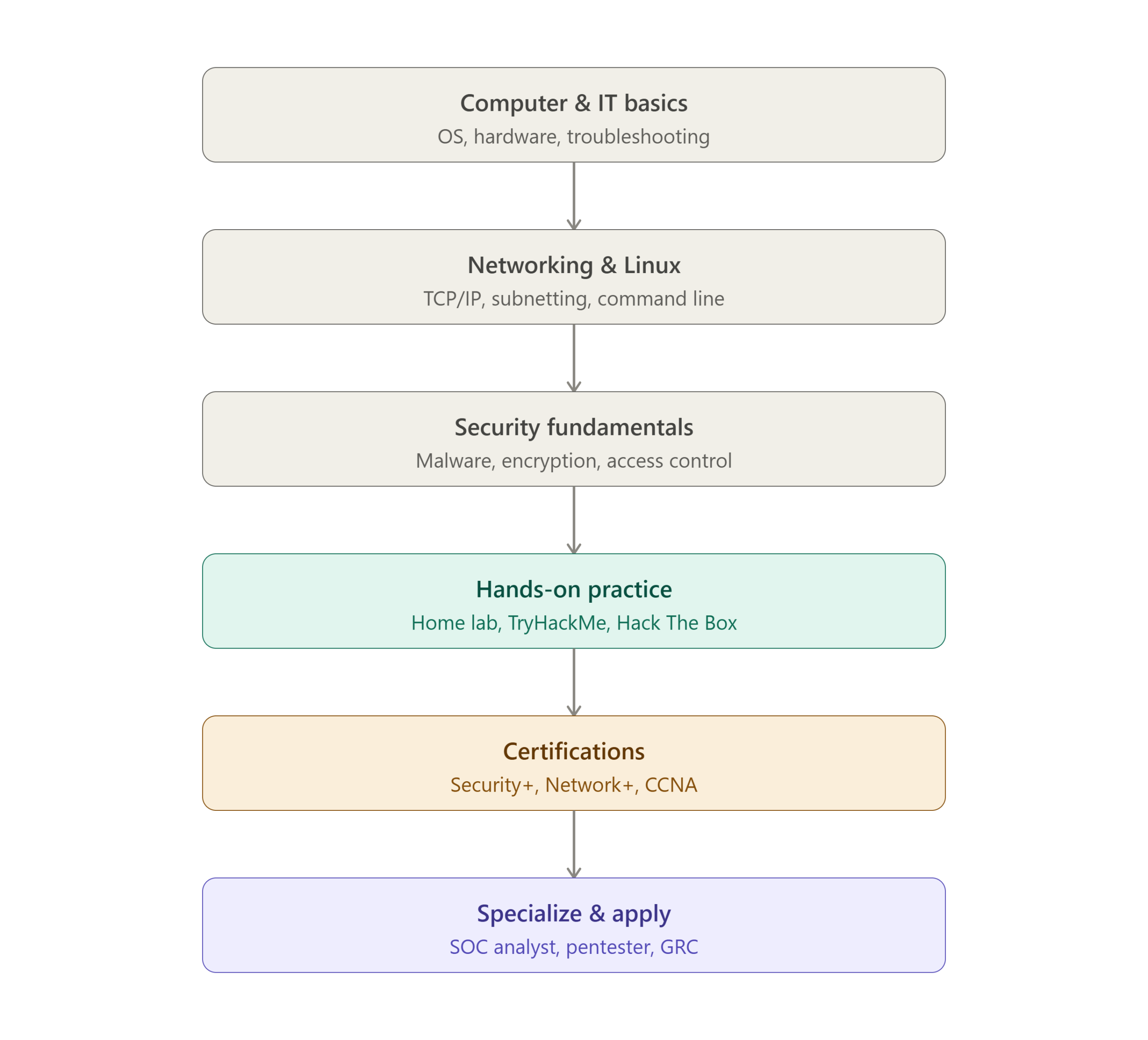
A Roadmap for Beginners
If you’re starting from scratch, follow this sequence:
- Learn computer basics.
- Learn networking (CCNA or Network+).
- Learn Linux.
- Learn Python.
- Study CompTIA Security+.
- Practice on TryHackMe.
- Build a cybersecurity home lab.
- Earn Security+ certification.
- Apply for IT Support or SOC Analyst roles.
- Continue with advanced certifications as you gain experience.
Final Thoughts
Cybersecurity is a rewarding career that offers excellent job prospects and opportunities for growth. The most successful professionals combine strong technical knowledge with practical experience and continuous learning. Start with the fundamentals, build hands-on skills through labs and projects, earn recognized certifications, and apply for entry-level IT roles to gain real-world experience. With dedication and consistent practice, you can build a successful career in cybersecurity.