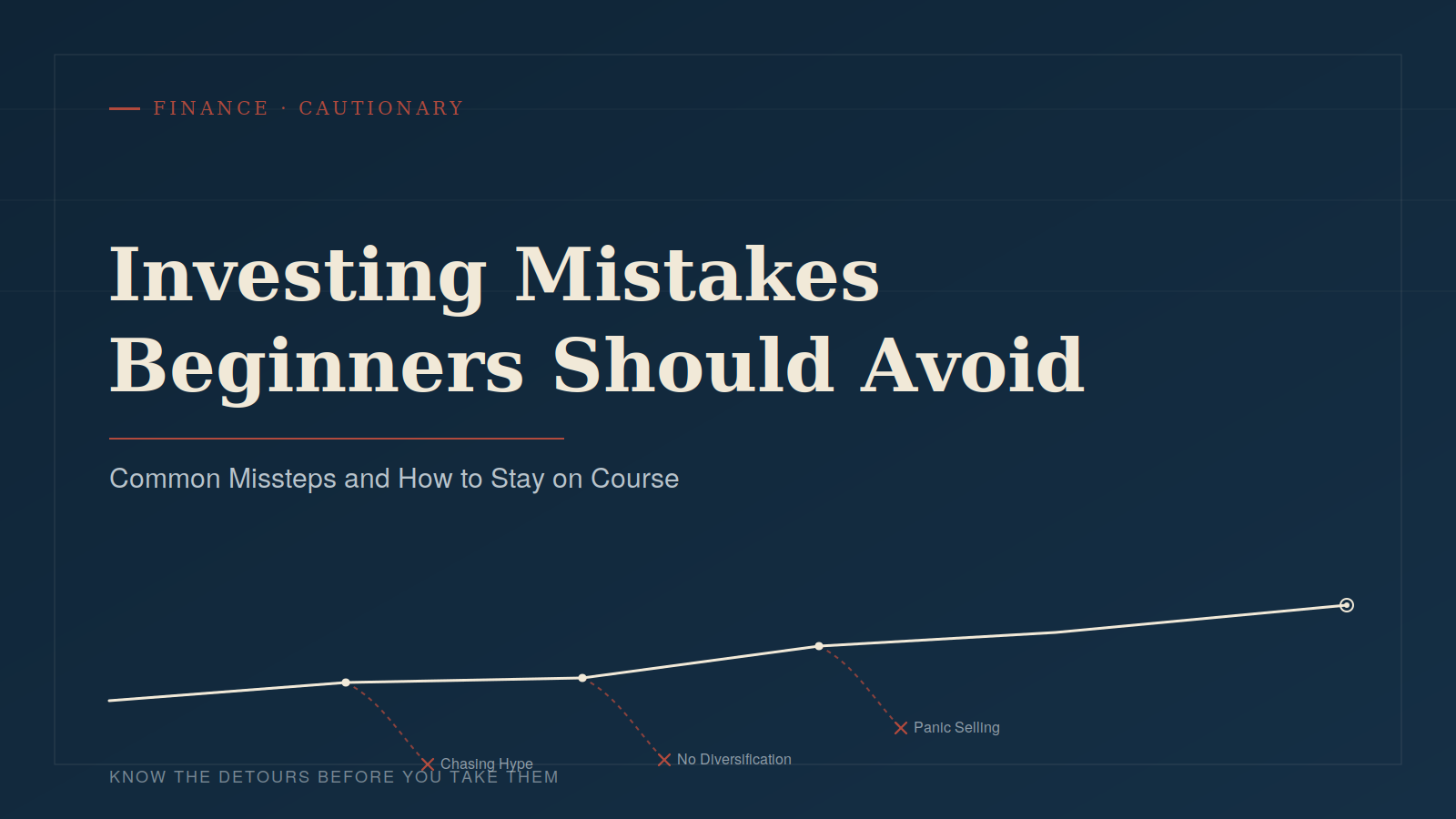
Investing is one of the most effective ways to grow your wealth over time, but it can also feel intimidating if you’re just starting out. New investors often enter the market with excitement and high expectations, only to discover that successful investing requires patience, knowledge, and discipline.
Making mistakes is a natural part of learning. However, some investing mistakes can slow your financial progress or even lead to significant losses. The good news is that many of these errors are avoidable.
Whether you’re investing in stocks, bonds, exchange-traded funds (ETFs), mutual funds, property, or retirement accounts, understanding the common pitfalls can help you make better decisions and stay focused on your long-term goals.
In this guide, we’ll explore the most common investing mistakes beginners make and explain how you can avoid them to build a stronger financial future.
Why New Investors Make Mistakes
Many beginner investors make decisions based on emotions, incomplete information, or unrealistic expectations.
Common reasons include:
- Limited financial knowledge
- Fear of missing out (FOMO)
- Following social media trends
- Trying to make quick profits
- Lack of a long-term investment plan
Understanding these challenges is the first step toward becoming a more confident investor.
1. Investing Without a Plan
One of the biggest mistakes beginners make is investing without clear financial goals.
Before investing, ask yourself:
- Why am I investing?
- What am I saving for?
- How long can I leave my money invested?
- How much risk am I comfortable taking?
Having a plan helps guide your decisions and reduces the temptation to react emotionally to short-term market changes.
2. Expecting Quick Profits
Many people believe investing is a fast way to become wealthy.
In reality, successful investing usually takes years—not weeks or months.
While some investments may perform exceptionally well over short periods, markets naturally experience ups and downs. Long-term investing has historically been more successful than trying to make quick profits through constant buying and selling.
Patience is one of the most valuable qualities an investor can develop.
3. Not Doing Enough Research
Investing based solely on recommendations from friends, influencers, or social media can be risky.
Before investing, take time to understand:
- The investment itself
- The risks involved
- Historical performance
- Fees and costs
- Your own reasons for investing
Making informed decisions is always better than following trends without understanding them.
4. Putting All Your Money into One Investment
Concentrating all your money in one company, industry, or asset increases risk.
If that investment performs poorly, your entire portfolio could suffer.
Instead, consider spreading your investments across different asset types, industries, or regions. This approach, known as diversification, helps reduce the impact of a single investment performing badly.
5. Letting Emotions Control Your Decisions
Financial markets naturally rise and fall.
Many beginners panic when prices decline and become overly confident when prices rise.
Emotional investing often leads to:
- Selling during market downturns
- Buying after prices have already increased significantly
- Making impulsive decisions
A disciplined, long-term strategy can help you stay focused despite short-term market fluctuations.
6. Trying to Time the Market
Some investors try to predict exactly when prices will rise or fall.
Even experienced professionals struggle to consistently predict short-term market movements.
Instead of trying to buy at the absolute lowest price and sell at the highest, many long-term investors focus on investing consistently over time.
Regular investing can reduce the pressure of trying to predict the market.
7. Ignoring Investment Fees
Small fees may seem insignificant, but they can reduce your returns over many years.
Common costs include:
- Management fees
- Brokerage fees
- Transaction fees
- Platform fees
Always understand what you’re paying before investing.
Choosing investments with reasonable costs can improve your long-term returns.
8. Investing Money You’ll Need Soon
Investments can fluctuate in value.
If you need your money in the near future, you may be forced to sell during an unfavorable market period.
Many financial experts recommend keeping an emergency fund separate from your long-term investments to cover unexpected expenses.
9. Chasing “Hot” Investments
Every year, certain investments become extremely popular.
While some perform well, others may already be overpriced by the time many new investors buy them.
Instead of chasing trends, focus on investments that align with your financial goals and risk tolerance.
Avoid making decisions based solely on hype.
10. Forgetting About Inflation
Keeping all your money in low-interest accounts may feel safe, but inflation can reduce your purchasing power over time.
Investing can help your money grow and potentially outpace inflation over the long term.
Understanding the relationship between inflation and investment returns is an important part of financial planning.
11. Not Reviewing Your Portfolio
Investing isn’t something you should completely ignore after getting started.
Review your investments periodically to ensure they still match your goals.
Ask yourself:
- Has my financial situation changed?
- Am I comfortable with my current level of risk?
- Does my investment strategy still suit my objectives?
Regular reviews help keep your portfolio aligned with your plans.
12. Borrowing Money to Invest
Using borrowed money to invest can significantly increase financial risk.
If your investment loses value, you may still be responsible for repaying the borrowed funds plus interest.
Unless you fully understand the risks, investing with borrowed money is generally not suitable for beginners.
13. Ignoring Tax Considerations
Taxes can affect your investment returns.
Different investments may have different tax implications depending on where you live and the type of account you use.
Understanding how taxes apply to your investments can help you make more informed decisions and avoid surprises.
If necessary, seek guidance from a qualified financial or tax professional.
14. Comparing Yourself to Other Investors
It’s easy to feel discouraged when others appear to be earning higher returns.
However, everyone’s financial situation is different.
Factors such as:
- Income
- Goals
- Age
- Risk tolerance
- Investment timeline
all influence investment decisions.
Focus on your own progress rather than comparing yourself to others.
15. Stopping After One Bad Experience
Every investor experiences losses at some point.
A temporary decline doesn’t necessarily mean your investment strategy has failed.
Successful investing often involves remaining patient during periods of market uncertainty while continuing to make informed decisions.
Learning from mistakes is part of becoming a better investor.
Good Habits Every Beginner Investor Should Develop
Successful investing is built on consistent habits rather than perfect predictions.
Consider these habits:
- Set clear financial goals.
- Invest regularly.
- Continue learning about investing.
- Diversify your portfolio.
- Review your investments periodically.
- Keep emotions under control.
- Maintain realistic expectations.
- Think long term.
These habits can help build confidence and improve decision-making over time.
Signs You May Be Ready to Start Investing
You may be ready to begin investing if you:
- Have a stable source of income.
- Have built an emergency fund.
- Understand your financial goals.
- Are comfortable leaving money invested for the long term.
- Have learned the basics of investing.
Starting with a solid foundation can make your investing journey more manageable.
Frequently Asked Questions
Is it normal to lose money when investing?
Yes. Investment values can rise and fall over time. Short-term losses are common, but many investors focus on long-term performance rather than daily market movements.
How much money should beginners invest?
The amount depends on your financial situation and goals. Many investment platforms allow people to start with relatively small amounts. It’s generally wise to invest only money you can leave invested for the long term.
Should beginners invest every month?
Many investors choose to invest regularly because it encourages consistency and reduces the temptation to try to predict market movements. Your approach should match your financial circumstances and objectives.
What’s the biggest mistake new investors make?
One of the most common mistakes is making emotional decisions—buying because of excitement or selling because of fear. Having a clear investment plan can help reduce emotional decision-making.
Final Thoughts
Every investor starts as a beginner, and making a few mistakes along the way is part of the learning process. What matters most is recognizing common pitfalls and developing habits that support long-term success.
By creating a clear investment plan, staying informed, diversifying your portfolio, and avoiding emotional decisions, you can build a strong foundation for your financial future. Remember that investing is generally a long-term journey, not a race to achieve quick profits.
The most successful investors aren’t necessarily those who take the biggest risks—they’re often the ones who remain patient, continue learning, and stick to a well-thought-out strategy. With time, discipline, and informed decision-making, you can work toward achieving your financial goals with greater confidence.