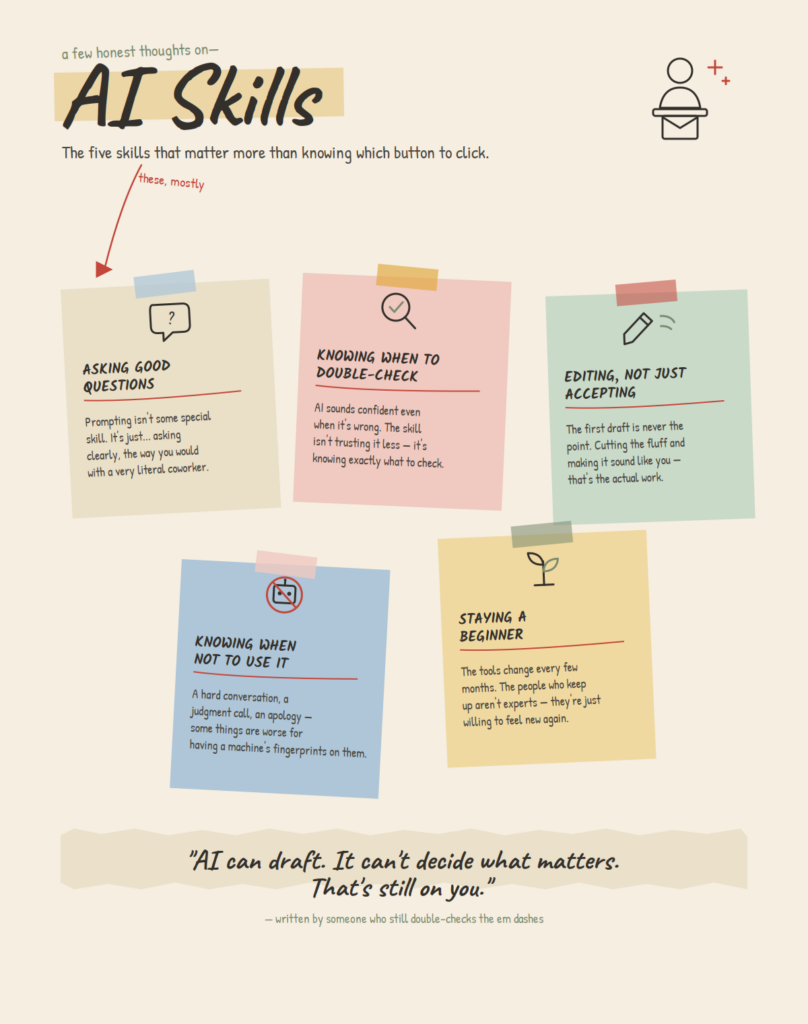
Artificial intelligence (AI) is no longer a technology reserved for software developers and data scientists. It has become an essential part of the modern workplace, helping businesses improve productivity, automate routine tasks, analyze large amounts of data, and make better decisions.
As AI continues to reshape industries, employers are increasingly looking for candidates who understand how to work with AI tools—not compete against them. Whether you’re applying for an office job, working in healthcare, marketing, finance, education, or customer service, having AI-related skills can make your CV more attractive and improve your career prospects.
The good news is that you don’t need to become an AI engineer to benefit from this trend. Learning how to use AI effectively can help you stand out in almost any profession.
This guide explores the AI skills employers value most in 2026, why they matter, and how you can start developing them.
Why AI Skills Matter More Than Ever
Artificial intelligence is changing the way businesses operate.
Instead of replacing every worker, AI is helping employees:
- Complete repetitive tasks faster.
- Improve decision-making.
- Analyze information more efficiently.
- Increase productivity.
- Deliver better customer service.
- Generate reports and presentations.
- Automate routine administrative work.
Because of this, employers increasingly prefer candidates who know how to use AI responsibly and effectively.
Employees who understand AI often spend less time on repetitive work and more time solving problems, collaborating with colleagues, and creating value for their organizations.
What Are AI Skills?
AI skills are the knowledge and abilities that allow you to work with artificial intelligence tools effectively.
These skills include both technical and non-technical abilities, such as:
- Using AI-powered software.
- Writing effective prompts for AI assistants.
- Understanding how AI supports decision-making.
- Evaluating AI-generated content.
- Protecting sensitive information when using AI.
- Combining human judgment with AI assistance.
Many of these skills can be learned without a computer science degree.
1. AI Literacy
One of the most important skills employers look for is AI literacy.
AI literacy means understanding:
- What AI can do.
- What AI cannot do.
- When to use AI.
- When human judgment is still necessary.
Employees don’t need to understand complex algorithms, but they should understand how AI fits into everyday work.
For example, an office administrator who knows how AI can summarize meeting notes or draft emails can often complete tasks more efficiently than someone who relies entirely on manual processes.
2. Prompt Writing
Prompt writing has become one of the most valuable workplace skills.
A prompt is the instruction you give to an AI tool.
The quality of the output depends largely on the quality of the prompt.
For example:
Instead of writing:
“Write a report.”
A stronger prompt would be:
“Write a professional one-page report summarizing quarterly sales performance for a retail company, using clear headings, bullet points, and a formal tone.”
Learning to give clear, detailed instructions helps AI produce better results.
3. Critical Thinking
One of the biggest misconceptions about AI is that its answers are always correct.
In reality, AI can sometimes generate outdated, inaccurate, or misleading information.
Employers therefore value people who can:
- Verify facts.
- Evaluate information.
- Identify mistakes.
- Think independently.
- Make informed decisions.
AI should support your thinking—not replace it.
4. Data Analysis
Many AI tools can organize and analyze information quickly.
However, employers still need people who can interpret the results.
Useful skills include:
- Reading charts.
- Understanding trends.
- Working with spreadsheets.
- Interpreting reports.
- Making recommendations based on data.
Data literacy is becoming valuable in almost every industry.
5. Digital Communication
AI is changing workplace communication.
Many professionals now use AI to:
- Draft emails.
- Summarize meetings.
- Prepare presentations.
- Create reports.
- Generate social media content.
Employers want candidates who can use AI to improve communication while ensuring messages remain accurate, professional, and appropriate for the audience.
6. AI-Assisted Research
Research that once took hours can now be completed much faster using AI.
Employers value candidates who know how to:
- Gather information efficiently.
- Compare multiple sources.
- Summarize complex topics.
- Organize research findings.
However, reliable research still requires checking information against trustworthy sources rather than relying solely on AI-generated responses.
7. Automation Skills
Automation is helping organizations eliminate repetitive tasks.
Examples include:
- Scheduling appointments.
- Sorting emails.
- Creating reports.
- Organizing files.
- Managing workflows.
Employees who understand basic automation tools often save significant amounts of time.
You don’t need programming knowledge to benefit from many modern automation platforms.
8. Adaptability
AI technology changes rapidly.
New tools and workplace systems appear regularly.
Employers increasingly look for candidates who are:
- Curious.
- Open to learning.
- Comfortable with new technology.
- Willing to improve their digital skills.
Adaptability is becoming just as important as technical expertise.
9. Ethical AI Use
Responsible AI use is becoming a workplace priority.
Employers expect staff to understand:
- Data privacy.
- Confidentiality.
- Copyright considerations.
- Fairness.
- Transparency.
Employees should avoid entering confidential company or customer information into public AI tools unless their organization specifically permits it.
Knowing when not to use AI is just as important as knowing when to use it.
10. Collaboration Between Humans and AI
The future of work isn’t about humans versus AI.
It’s about humans working alongside AI.
Successful employees know how to:
- Use AI to increase productivity.
- Review AI-generated work carefully.
- Add creativity and human judgment.
- Solve problems AI cannot.
- Build relationships with customers and colleagues.
Employers increasingly value people who can combine technology with strong interpersonal skills.
AI Skills for Different Careers
AI is useful across many professions.
Administration
Useful AI skills include:
- Drafting documents.
- Managing calendars.
- Organizing information.
- Summarizing meeting notes.
Marketing
Professionals can use AI to:
- Brainstorm campaign ideas.
- Generate content outlines.
- Analyze customer trends.
- Improve SEO research.
Customer Service
AI can help:
- Draft responses.
- Organize customer enquiries.
- Summarize conversations.
- Identify recurring issues.
Human empathy and problem-solving remain essential.
Finance
AI supports:
- Data analysis.
- Budget forecasting.
- Fraud detection.
- Financial reporting.
Professionals still need to verify results and make informed decisions.
Human Resources
AI assists with:
- Screening CVs.
- Drafting job descriptions.
- Organizing recruitment processes.
- Employee engagement analysis.
Final hiring decisions remain a human responsibility.
Education
Teachers and trainers can use AI to:
- Develop lesson plans.
- Create quizzes.
- Simplify complex concepts.
- Generate learning resources.
Educators should always review AI-generated material for accuracy.
How to Learn AI Skills
You don’t need expensive training to begin learning AI.
You can build your knowledge by:
- Taking free online courses.
- Practicing with AI assistants.
- Watching educational videos.
- Reading articles about AI in your industry.
- Experimenting with AI tools for everyday tasks.
The most effective way to learn is through regular practice.
Common AI Mistakes to Avoid
As you build your AI skills, avoid these common mistakes:
- Trusting AI without verifying information.
- Copying AI-generated content without editing it.
- Sharing confidential information with public AI tools.
- Using AI for tasks that require human judgment or legal expertise.
- Depending on AI instead of developing your own skills.
Remember, AI is designed to assist—not replace—your knowledge and experience.
Future Careers That Benefit from AI Skills
Professionals with AI skills are becoming increasingly valuable in fields such as:
- Information Technology
- Digital Marketing
- Healthcare
- Finance
- Human Resources
- Education
- Customer Service
- Engineering
- Project Management
- Business Administration
Regardless of your profession, understanding AI can improve your efficiency and career prospects.
Final Thoughts
Artificial intelligence is transforming the workplace, but the most valuable employees will not be those who simply know how to use AI—they will be those who know how to use it wisely.
Developing skills such as AI literacy, prompt writing, critical thinking, data analysis, digital communication, and ethical AI use can help you stand out in today’s competitive job market. These abilities complement traditional workplace skills rather than replace them.
As technology continues to evolve, employers will increasingly seek professionals who combine technical knowledge with creativity, adaptability, and sound judgment. By investing time in learning AI skills today, you are preparing yourself for the opportunities of tomorrow and positioning yourself for long-term career success.
Frequently Asked Questions
Do I need to know programming to use AI at work?
No. Many AI tools are designed for everyday users and require no coding knowledge. Basic AI literacy and effective prompt writing are often enough for many roles.
Will AI replace all jobs?
AI is expected to change many jobs by automating certain tasks, but most roles will still require human skills such as communication, creativity, leadership, empathy, and decision-making.
Which AI skill should I learn first?
Start with AI literacy and prompt writing. These foundational skills will help you use AI tools more effectively in almost any profession.
Can AI skills help me get hired?
Yes. Employers increasingly value candidates who can use AI responsibly to improve productivity, solve problems, and adapt to new technologies.