The workplace is changing rapidly, and employers are looking for more than just qualifications and experience. In 2026, companies want employees who can adapt to technological changes, solve problems, and continuously learn new skills. As artificial intelligence, automation, and digital transformation reshape industries, job seekers must develop both technical and human skills to remain competitive.
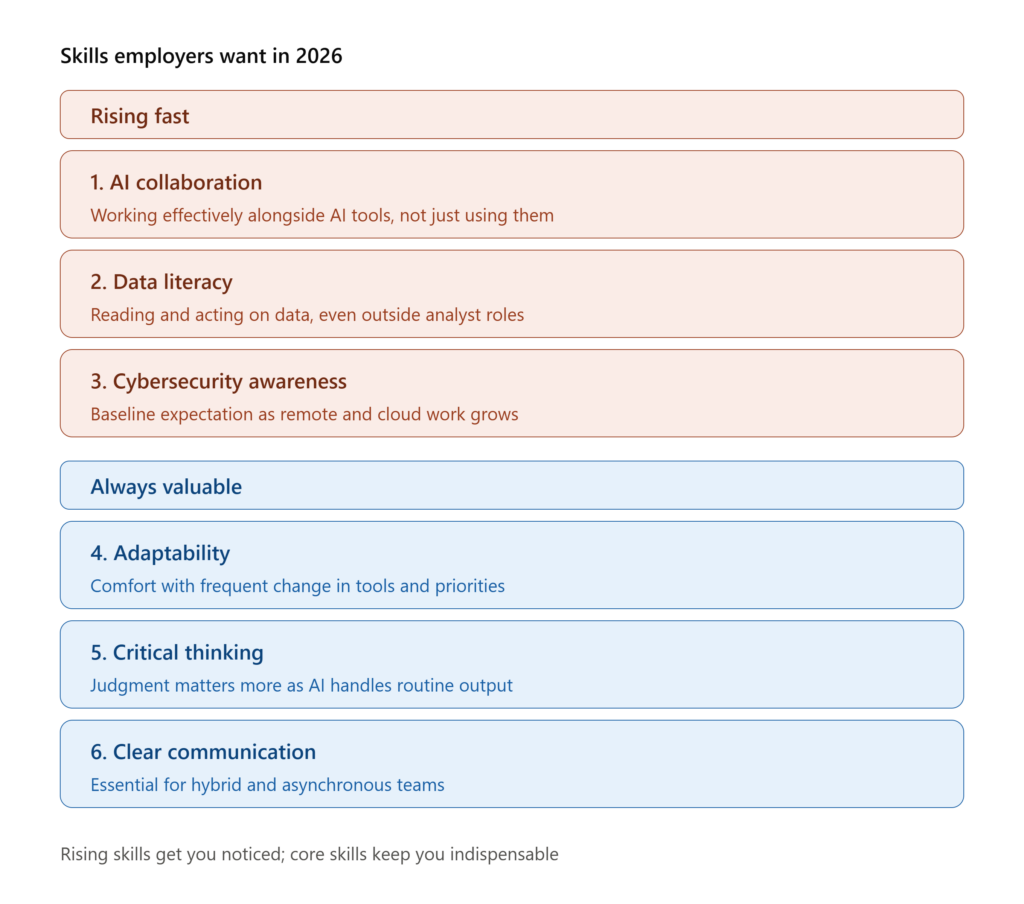
Whether you are a student, graduate, or working professional, understanding the skills employers value most can help you prepare for future opportunities and build a successful career.
Why Skills Matter More Than Ever
Businesses are increasingly adopting skills-based hiring practices. Instead of focusing only on degrees and years of experience, employers are paying closer attention to what candidates can actually do.
Technology is automating routine tasks, making human abilities such as creativity, communication, and critical thinking more valuable than ever. Employers need people who can work with technology while also providing the judgment and decision-making that machines cannot replace.
1. Artificial Intelligence Collaboration
Artificial Intelligence has become part of everyday business operations. Many companies now use AI tools for customer service, research, data analysis, content creation, and administrative tasks.
Employers are looking for people who understand how to work effectively with AI tools and use them responsibly.
Important AI skills include:
- Using AI tools to improve productivity.
- Writing effective prompts.
- Reviewing AI-generated content for accuracy.
- Understanding the limitations of AI.
- Applying AI solutions to business challenges.
Professionals who can combine technology with human judgment are becoming highly valuable in every industry.
2. Data Literacy
Data is one of the most important resources in modern business. Companies make decisions based on information collected from customers, markets, and business operations.
Employees who can understand and interpret data are in high demand.
Data literacy includes:
- Reading reports and dashboards.
- Understanding charts and graphs.
- Using spreadsheets effectively.
- Identifying trends and patterns.
- Making informed decisions using data.
You do not need to be a data scientist to benefit from these skills. Basic data literacy can significantly improve your employability.
3. Cybersecurity Awareness
As businesses become increasingly digital, cybersecurity has become everyone’s responsibility.
Cyberattacks continue to rise, and many security incidents occur because of human error. Employers want workers who understand how to protect company information and use technology safely.
Important cybersecurity skills include:
- Creating strong passwords.
- Recognising phishing scams.
- Protecting sensitive information.
- Following secure online practices.
- Understanding data privacy principles.
Even non-technical employees are expected to have basic cybersecurity knowledge.
4. Adaptability and Continuous Learning
Technology changes quickly, and industries continue to evolve. Employers need people who can adjust to new systems, learn new skills, and remain productive during change.
Adaptability involves:
- Learning new software and tools.
- Embracing workplace changes.
- Taking initiative to develop new skills.
- Being open to new responsibilities.
- Solving problems in unfamiliar situations.
Employees who can adapt quickly often become valuable assets to their organisations.
5. Critical Thinking and Problem Solving
Automation can handle routine tasks, but businesses still rely on people to solve problems and make decisions.
Critical thinking allows employees to:
- Analyse information carefully.
- Evaluate different solutions.
- Identify risks.
- Make informed decisions.
- Improve business processes.
Employers value individuals who can think independently and provide solutions to challenges.
6. Communication Skills
Strong communication remains one of the most important workplace skills.
Modern workplaces depend heavily on emails, virtual meetings, presentations, and collaboration tools. Employees who communicate clearly are often more productive and effective.
Communication skills include:
- Writing professionally.
- Speaking confidently.
- Listening actively.
- Presenting ideas clearly.
- Working effectively with teams.
Good communication strengthens relationships and improves workplace efficiency.
7. Digital Literacy
Digital skills are now essential in nearly every profession.
Employers expect candidates to be comfortable using technology and learning new digital tools.
Important digital skills include:
- Microsoft Office applications.
- Cloud-based systems.
- Collaboration software.
- Project management tools.
- Basic technical troubleshooting.
Employees with strong digital skills can adapt more easily to modern workplaces.
8. Emotional Intelligence
Technical knowledge alone is not enough to succeed. Employers also value emotional intelligence because it helps people work effectively with others.
Emotional intelligence involves:
- Self-awareness.
- Empathy.
- Relationship management.
- Handling conflict professionally.
- Understanding the emotions of others.
Strong emotional intelligence contributes to better teamwork and leadership.
9. Leadership and Initiative
Companies appreciate employees who take responsibility and contribute beyond their assigned duties.
Leadership includes:
- Taking ownership of tasks.
- Solving problems independently.
- Supporting colleagues.
- Suggesting improvements.
- Demonstrating accountability.
Even entry-level employees can demonstrate leadership by showing initiative and a willingness to contribute.
10. Creativity and Innovation
Innovation is essential for business growth and competitiveness.
Creative employees help organisations:
- Develop new ideas.
- Improve products and services.
- Solve problems differently.
- Increase efficiency.
- Identify opportunities for improvement.
Creativity is valuable in every industry, not only in artistic professions.
How to Develop These Skills
You can build these skills through:
- Online courses and certifications.
- Personal projects.
- Volunteering opportunities.
- Industry workshops and webinars.
- Reading industry publications.
- Networking with professionals.
- Continuous practice and learning.
The willingness to learn and improve is one of the most valuable qualities an employer can find.
How to Showcase These Skills on Your CV
Instead of simply listing skills, provide evidence.
Weak example:
Communication Skills
Strong example:
Presented project findings to a team of twenty students and achieved the highest project grade.
Weak example:
Problem Solving
Strong example:
Resolved technical issues in a university computer laboratory, reducing downtime by thirty percent.
Specific examples make your skills more credible and impressive.
The Future of Work
The workplace will continue to evolve as technology advances. New jobs will emerge, and existing roles will require different abilities.
The professionals who remain competitive will be those who:
- Continue learning.
- Embrace technology.
- Develop both technical and human skills.
- Adapt to change.
- Demonstrate real-world problem-solving abilities.
Conclusion
The most valuable skills in 2026 combine technology, adaptability, and human intelligence. Employers are looking for candidates who can work effectively with AI, understand data, communicate clearly, solve problems, and continuously develop themselves.
Investing in these skills today will improve your employability, increase your career opportunities, and prepare you for the future of work. In a rapidly changing job market, the people who commit to lifelong learning and continuous improvement will be the ones who achieve long-term career success.