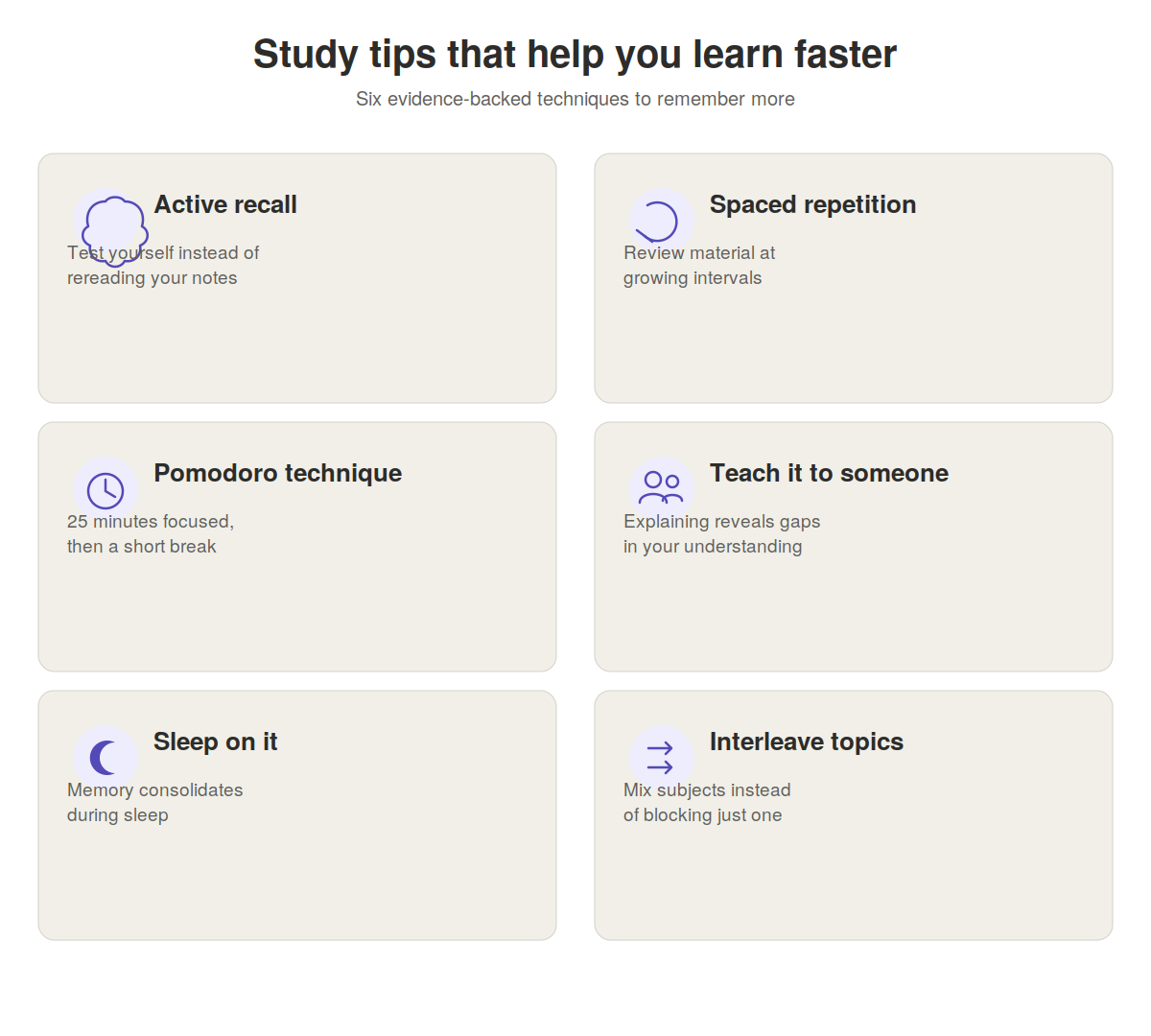
Studying isn’t about spending the most hours with your books open—it’s about studying effectively. Many students spend hours reading the same pages repeatedly but remember very little during tests or interviews. The most successful learners use proven study techniques that improve understanding, memory, and confidence.
Whether you’re preparing for school exams, professional certifications like CCNA, CompTIA Security+, or simply learning a new skill, these study tips can help you achieve better results.
1. Set Clear Learning Goals
Before you start studying, know exactly what you want to accomplish.
Instead of saying:
“I’ll study networking today.”
Say:
“Today I’ll learn the OSI Model and be able to explain all seven layers.”
Breaking large topics into smaller goals makes studying more manageable and keeps you motivated.
2. Create a Study Schedule
Consistency beats cramming.
Set aside dedicated study time every day.
For example:
- Monday: Networking Fundamentals
- Tuesday: IP Addressing
- Wednesday: Routing
- Thursday: Switching
- Friday: Practice Questions
- Saturday: Lab Practice
- Sunday: Revision
Even studying for one to two hours daily is more effective than studying for ten hours once a week.
3. Study in Short Sessions
Your brain learns better in focused sessions.
A good method is the Pomodoro Technique:
- Study for 25–50 minutes.
- Take a 5–10 minute break.
- Repeat the cycle.
Short breaks help maintain concentration and prevent mental fatigue.
4. Take Notes in Your Own Words
Don’t simply copy what the textbook says.
After reading a topic, close the book and explain it in your own words.
This helps you understand concepts instead of memorizing them.
Use headings, bullet points, and diagrams to organize your notes.
5. Practice Active Recall
One of the best ways to learn is to test yourself regularly.
Instead of rereading your notes:
- Cover the answers.
- Ask yourself questions.
- Write down everything you remember.
- Check your answers afterward.
Active recall strengthens long-term memory far more effectively than passive reading.
6. Use Spaced Repetition
Review information several times over increasing intervals.
A simple schedule might be:
- Day 1: Learn the topic.
- Day 2: Review.
- Day 4: Review again.
- Day 7: Review.
- Day 14: Review.
- Day 30: Final review.
This technique greatly improves long-term retention.
7. Practice What You Learn
Reading alone isn’t enough.
If you’re studying cybersecurity or IT:
- Build a home lab.
- Practice networking commands.
- Configure routers and switches.
- Use virtual machines.
- Complete online labs.
The more you practice, the more confident you’ll become.
8. Remove Distractions
Your environment affects your concentration.
When studying:
- Put your phone on silent.
- Close unnecessary browser tabs.
- Turn off social media notifications.
- Find a quiet place.
- Keep only the materials you need on your desk.
Focused study sessions are far more productive.
9. Teach Someone Else
One of the fastest ways to discover whether you truly understand a topic is to teach it.
Explain the concept to:
- A friend
- A family member
- A classmate
- Yourself in front of a mirror
If you struggle to explain it simply, revisit the topic until you can.
10. Use Multiple Learning Resources
Don’t rely on one textbook.
Use:
- Books
- Video tutorials
- Online courses
- Practice labs
- Documentation
- Study guides
Different explanations can help you understand difficult concepts.
11. Practice Past Questions
If you’re preparing for an exam or certification:
- Complete practice exams.
- Review previous questions.
- Understand why answers are correct.
- Learn from your mistakes.
This improves both knowledge and exam confidence.
12. Get Enough Sleep
Sleep is essential for learning.
During sleep, your brain processes and stores new information.
Aim for 7–9 hours of sleep each night.
Studying all night before an exam is usually less effective than getting a good night’s rest.
13. Eat Healthy and Stay Hydrated
Your brain performs better when your body is healthy.
Drink enough water and eat nutritious meals that include:
- Fruits
- Vegetables
- Whole grains
- Lean proteins
- Healthy fats
Avoid relying on excessive caffeine or sugary snacks to stay awake.
14. Stay Consistent
Learning is a marathon, not a sprint.
Studying a little every day builds stronger knowledge than trying to learn everything in one weekend.
Small daily improvements lead to significant progress over time.
15. Believe in the Learning Process
Don’t compare yourself to others.
Some people learn quickly, while others need more time. What matters is consistency and persistence. Every study session, every practice question, and every mistake helps you improve.
Focus on your progress rather than perfection.
Final Thoughts
Successful studying isn’t about spending the longest hours with your books—it’s about using your time wisely. Set clear goals, follow a consistent study schedule, practice active recall, review your work regularly, and apply what you learn through practical exercises. Stay patient, avoid distractions, and remember that mastering new skills takes time. With discipline and the right study techniques, you can build confidence, retain information more effectively, and achieve success in your exams, certifications, or future career.